A Parent’s Guide to Building a Lifelong Love of Reading
One of the most rewarding things you can do as a parent is watch your child decode their first words, then sentences, and eventually whole stories. But the road to reading fluency isn’t always smooth. Every child is different, and what works for one may not work for another. The good news is there are proven strategies, backed by research and lived parental experience, that can make a real difference no matter where your child is starting from.
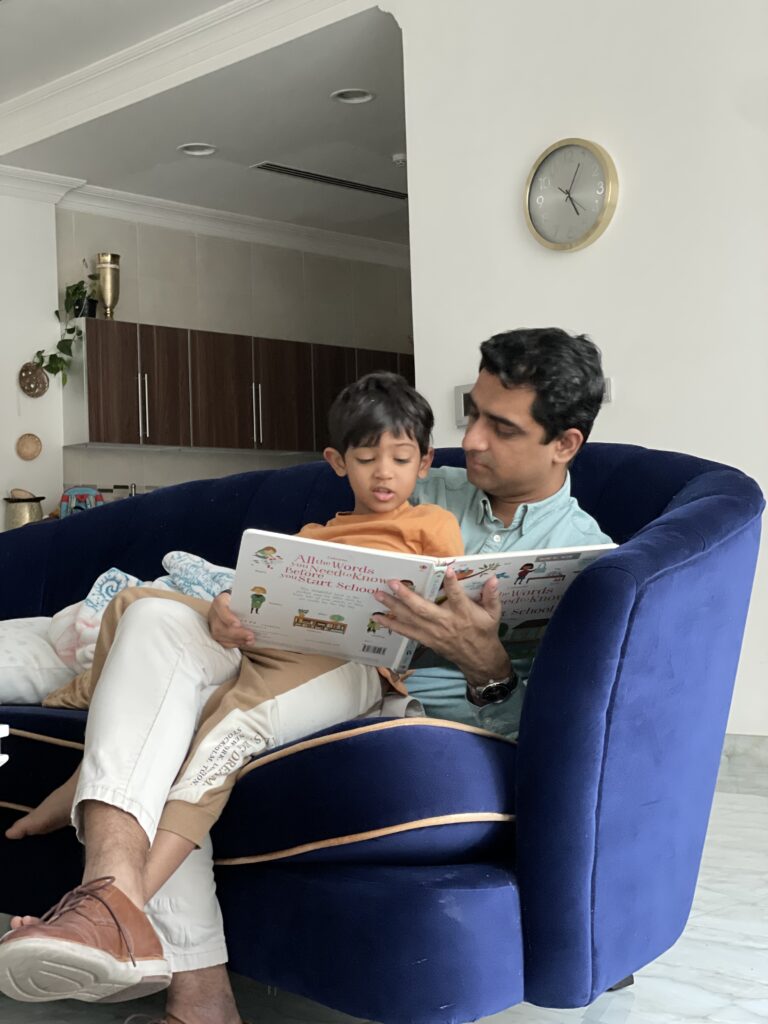
This blog is split into two parts. The first covers practical, research-backed strategies any parent can use. The second is a personal account of what actually worked in our household — the real, messy, beautiful story of one child’s reading journey.
Part One: Strategies to Help Your Child Learn to Read
1. Start Early — Even Before They Can Read
Reading readiness begins long before a child can recognise letters. From infancy, talking to your baby, singing songs, and narrating daily activities all build the language foundation that reading depends on. By the time your child is a toddler, pointing to pictures in books, asking “what’s that?”, and letting them turn pages develops a sense of how books work — what experts call “print awareness.”
Don’t worry about “teaching” at this stage. The goal is to make books a warm, familiar, joyful part of daily life.
2. Read Aloud Together — Every Single Day
Making bedtime reading a ritual is the classic choice. Experts also agree that reading aloud to your child is the single most powerful thing you can do to prepare them for reading success. It builds vocabulary, comprehension, and listening skills
Bedtime reading is calm, cosy, and becomes something children look forward to. At least my son did. He used to love storytelling at night. Right from the age of 2 years. I made him understand the characters, especially animals. He became a dragon fan after I read him the kids book There’s a Dragon in Your Book kids book. And after that i had to make up many dragon bedtime stories for him myself to satisfy his dragon genre craze. You can do the same. Use the big picture books and show the kids and read it to them. They will start loving books. But mornings, car rides with audiobooks, or reading over breakfast all count too. Sometimes I used to put YouTube kids’ stories only the audio to make stories. Consistency matters more than length. Even ten minutes a day adds up to over 60 hours a year.
Some kids books that are good for 2 to 3-year-old:
- Jo-Jo The Orangutan
- Animal ABC – Board Book for Kids
- I Love You to the Moon and Back
3. Build Phonics Skills — It’s the Foundation of Decoding
Phonics is the understanding that letters represent sounds, and that sounds can be blended to form words. It sounds simple, but it is the cornerstone of reading. Research consistently shows that explicit phonics instruction — actually teaching children how letters and sounds connect. It dramatically improves reading outcomes, especially for struggling readers.
You don’t need to be a teacher to do this at home. Play rhyming games in the car. Clap out syllables in words at dinner. Point out that “cat,” “cap,” and “can” all start with the same sound. These small, playful moments build the phonological awareness that makes learning to read much easier.
Lazy mommy tip: I used to put phonics songs on youtube. And used to sing along in a clear voice so my son could hear it. And see my tongue and lips move. These habits helped us reach where we are today. A fluent reader. Which I wasn’t until very late in my student life.
4. Create a Print-Rich Environment
Children model what they see. Let them see you reading too. Fill your home with books at their level. Make them a dedicated bookshelf in their bedroom or a basket of books in the living room. Easy access to magazines or comics that they find interesting.
I was never a reader, but when I birthed my son something made me research all these things and make small changes in the house that could promote English speaking and then reading right from his birth.
Children who grow up surrounded by words are primed to become readers, and a parent who reads for pleasure is one of the most powerful literacy influences in a child’s life.
Don’t overlook the world outside the home. Point out words on signs, menus, cereal boxes, and shop fronts. When children realise that reading is something that happens everywhere — not just in school — it transforms into a life skill rather than a chore.
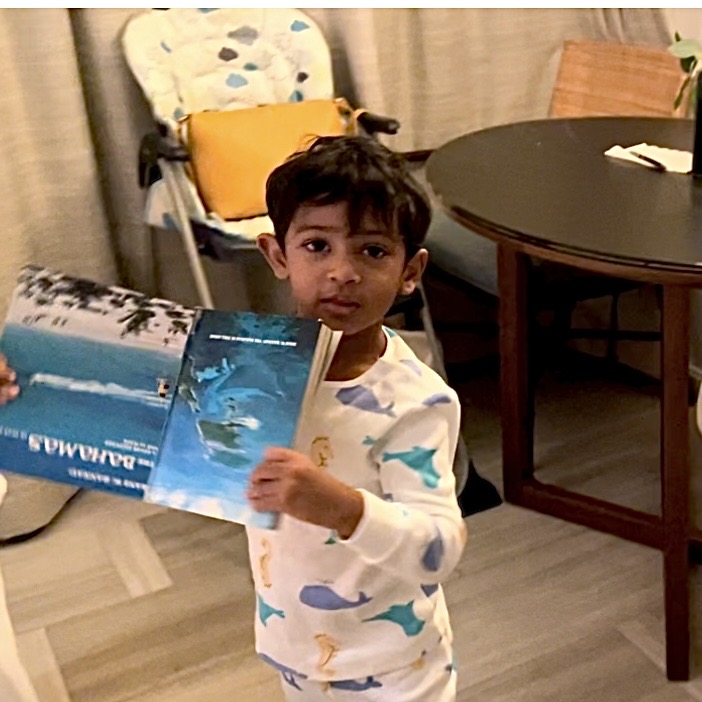
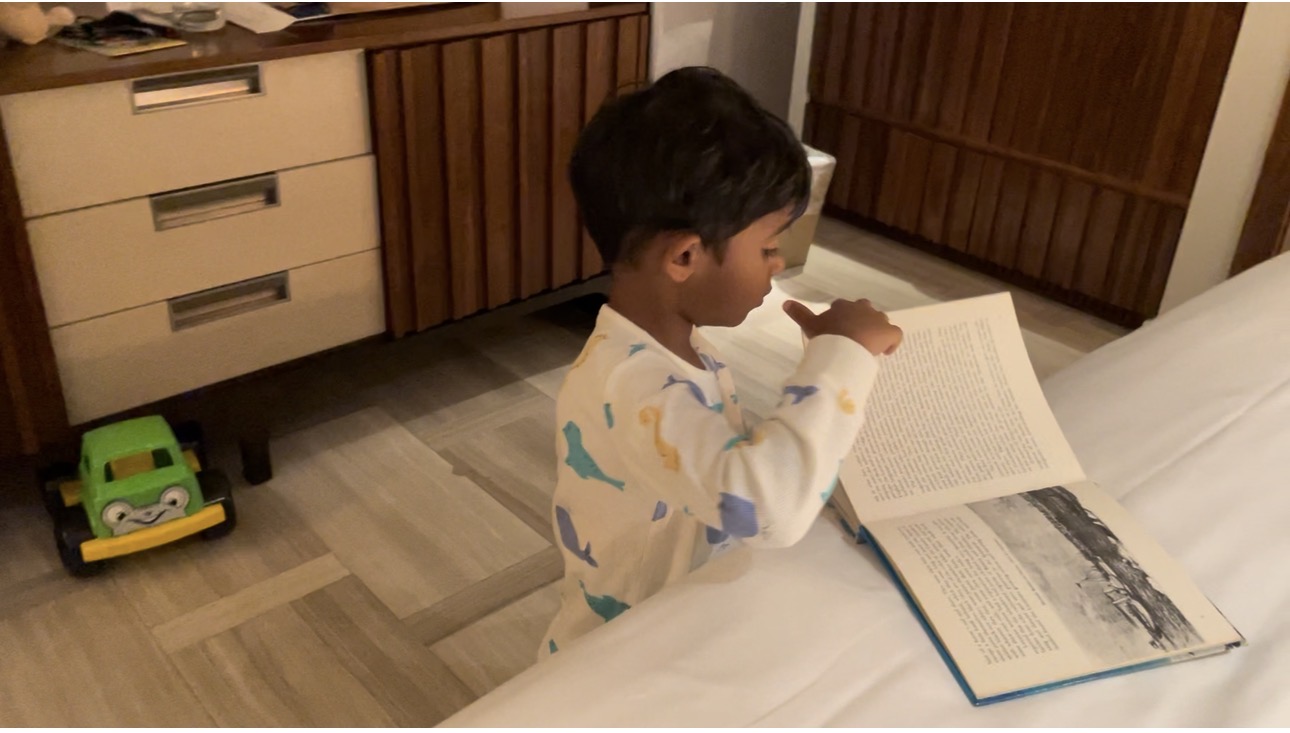
Writing this blog reminded me of an incident when my son, aged 5 years old asked me why you keep reading the building signs or something we saw outside the car or while playing. I never thought I would answer such a question. But being a parent is some kind of answering magic we receive from God I feel.
I told him a very important thing which I am not sure if he understood, but of course I had to repeat the same answer many times later also to make him remember why we read and later write. It’s because we don’t want someone to take your signature or consent on the wrong paper. If you can’t read or write, people in the world can take advantage of you.
They will say it says we will take you to Disneyland but when you reach it’s something else. So you must know how to read. These days I don’t get such questions so I believe he understood why he needs to read and write.
5. Follow Their Interests, Not the Curriculum
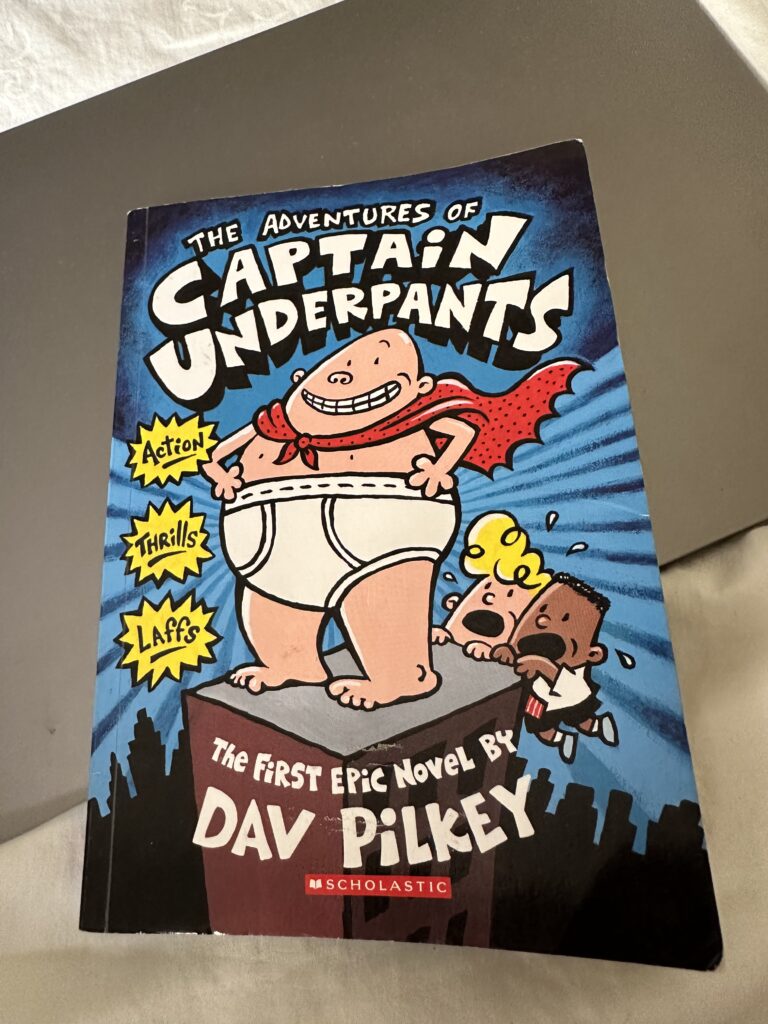
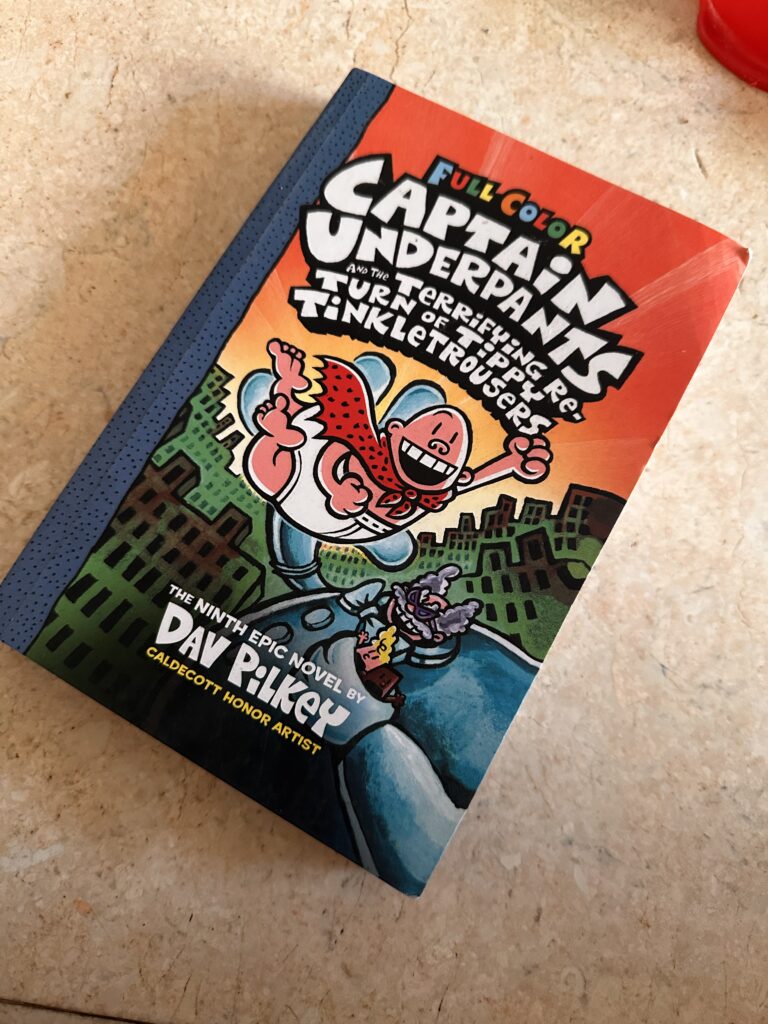
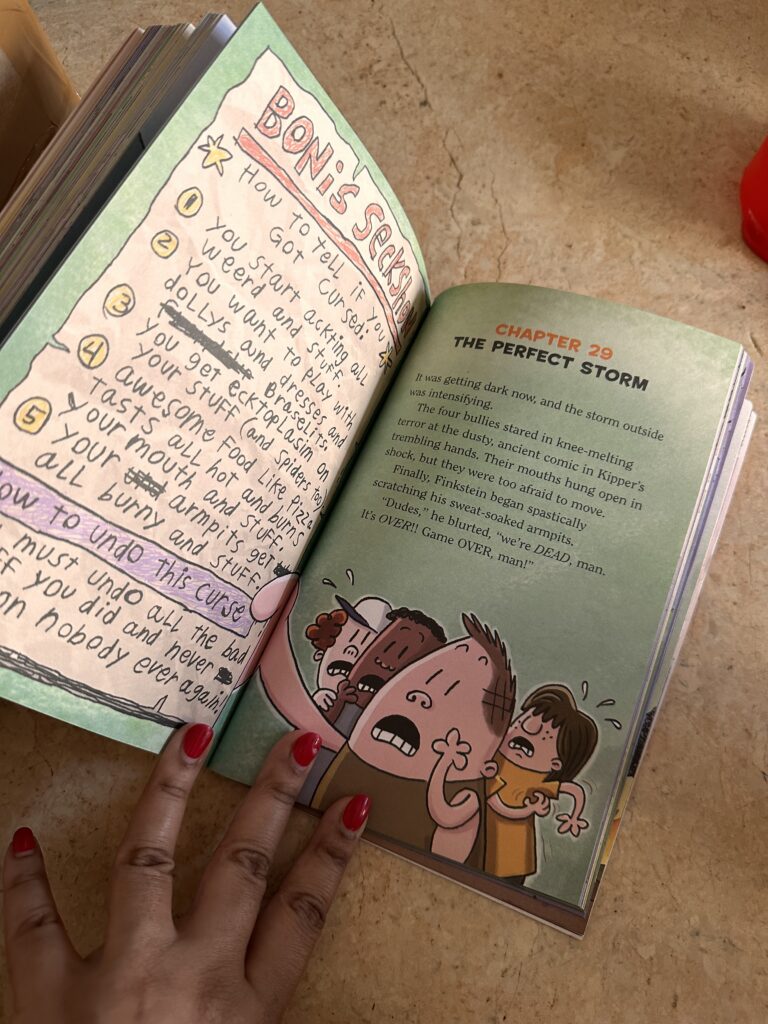
Even today, we don’t force him to read his school textbooks. Or any serious storybooks or books written by a very knowledgeable or senior writer. We buy him funny kids’ books and he enjoys them. It all started because I saw his potential to make a joke. And then I brought him some funny novels for kids and he loves them. These books (Captain Underpants Box Set by Dav Pilkey ) are cleverly written, they teach humour, polish reading, increase vocabulary and promote imagination. Sometimes I read these books with him and forget my worries.
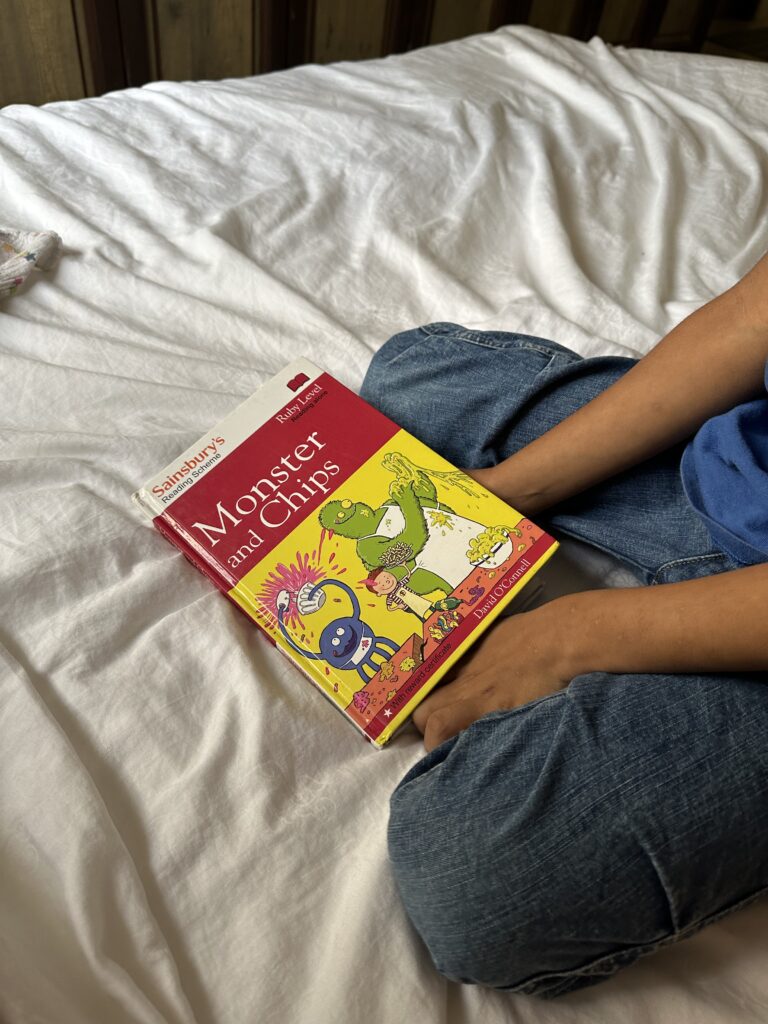
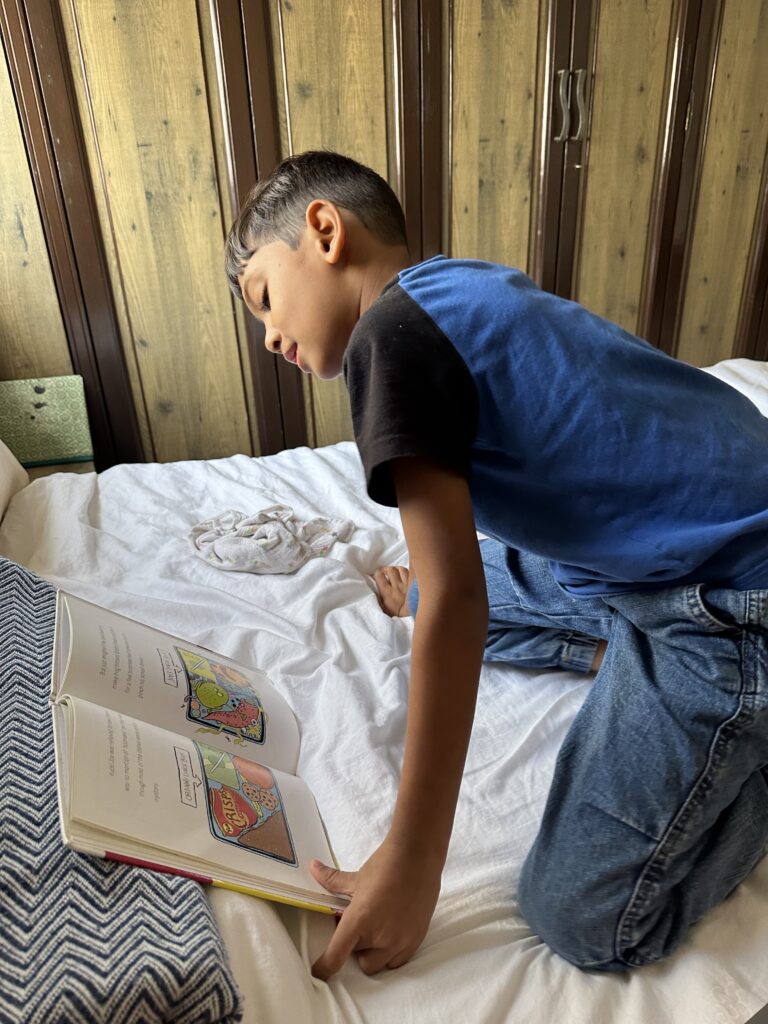
One of the biggest mistakes well-meaning parents make is pushing books their child isn’t ready for or interested in. A reluctant reader who falls in love with a book about dinosaurs, trucks, football, or fairies is far better off than one who struggles through “appropriate” texts they find boring.
Visit your local book stores and let your child choose freely. Let them read comics, joke books, or nonfiction fact books if that’s what grabs them. The format matters far less than the habit. Once the reading habit is established, expanding their range becomes much easier.
6. Be Patient and Celebrate Every Win
Learning to read is hard. It is a complex neurological process that takes years to fully develop. There will be frustrating moments like words that just won’t stick, evenings when your child pushes the book away, days when you wonder if they’re falling behind. This is completely normal.
Celebrate every milestone, no matter how small. The first word they read independently. The first time they laugh at a joke they decode themselves. The first time they ask to read to you instead of the other way around. These moments are everything. Praise the effort, not just the outcome, and make it clear that in your home, trying to read is always something to be proud of.
Part Two: What Helped My Child Learn to Read
I think we started sight words very late. In play schools or kindergarten, they start at the age of 3 or something. My son was almost understanding the use of phonics.
I made sight word cards with him, I wrote and he coloured. Then we started memorising the sight words 10 words a day and repeated them in daily life while doing some work or during our plays. Kids love games and I used to challenge him to say the words quickly, when I kept the card on the table. But before that i made him see and write the same sight words 5 to 10 times in a notebook. Also, I used to write a lot of sight words randomly on a paper all clustered, and told him to circle the words he could find. Now that I am writing this I am realising it took years of working together with him to reach this point where he can read fluently at the age of 6 years onwards.
You can say I was a bit influenced by the homeschooling ideas and I used to make a lot of worksheets and cards for him to practice at home in a playful manner.
You can check out some of my practice worksheets here:
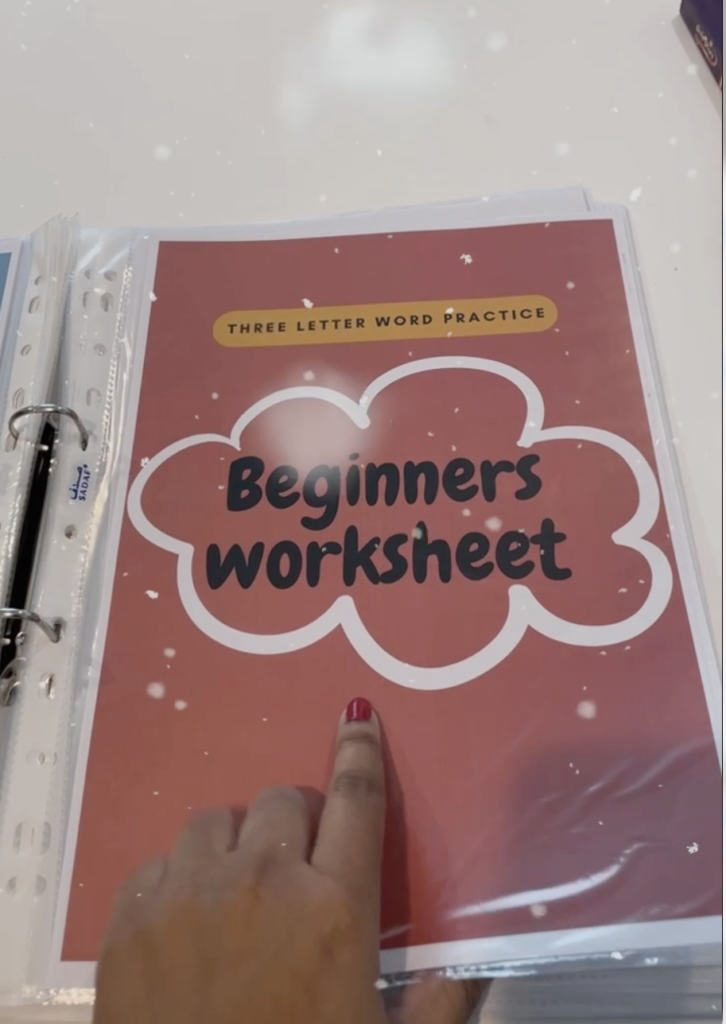
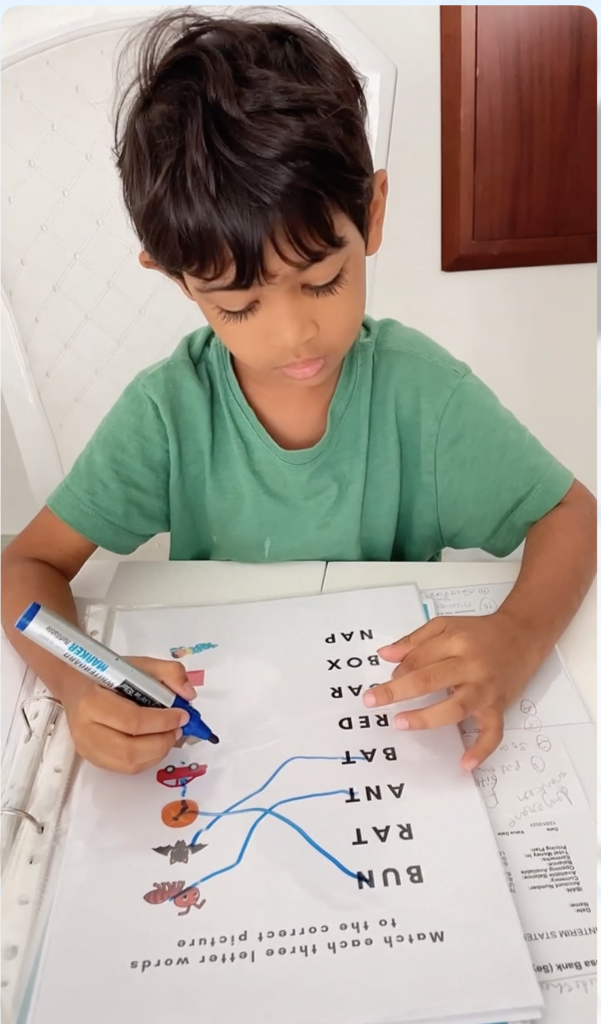
These worksheets are a proven method of teaching your child to read and write eventually.
Download the Khan Academy kids app. This app has helped my child read 3-letter words first and slowly move to the bigger words.
Learn 3-letter words with these easy to practice worksheet. #homeschooling #toddleractivities
Final Thoughts on how to Help Your Child Learn to Read
There is no single “right” way to raise a reader. The strategies above are starting points, not a rigid rulebook. What unites every successful reading story is the same thing: a child who felt supported, unhurried, and surrounded by people who valued books.
Your child’s reading journey is their own. Your job isn’t to rush it — it’s to walk alongside them, one page at a time.




0 Comments